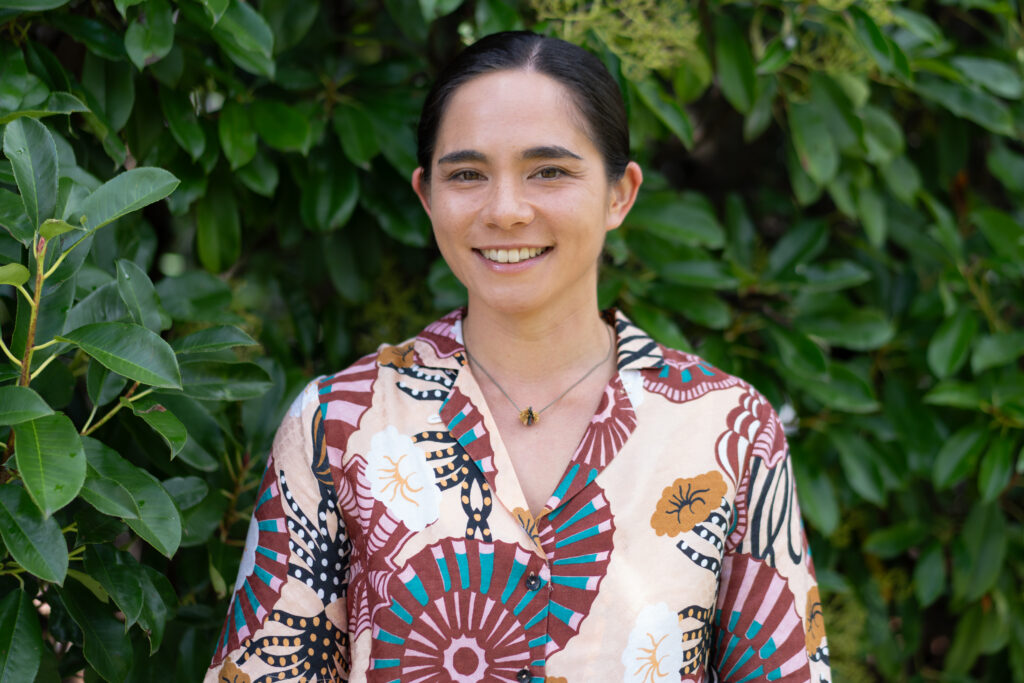
Winner of the 2026 Tracey Banivanua Mar PhD Prize and one highly commended awardee announced
The Australian Association for Pacific Studies is delighted to announce the winner and one highly commended awardee for the 2026 Tracey Banivanua Mar PhD Prize!
AAPS received an outstanding and highly competitive range of Pacific Studies theses this year, showcasing exceptional scholarship and innovation across the field.
The winner of this year’s PhD prize is Dr Mere Taito, whose thesis by creative works stood out for its originality, depth, and impact. Dr Taito received her PhD from the University of Otago and is currently the inaugural Postdoctoral Fellow in Native American and Indigenous Studies at the Centre for Native American and Indigenous Research (CNAIR) and the Department of English at Northwestern University.
We also warmly congratulate Dr Philippa Louey, who was recognised as a Highly Commended awardee for her remarkable and thoughtfully executed research. Dr Louey received her PhD from the Australian National University and is now a Senior Research Associate with the Lancaster Environment Centre at Lancaster University.
A special thank you to our judging panel of AAPS members, Associate Professor Amanda Harris (University of Sydney) and Associate Professor Mandy Treagus (Adelaide University), for their careful and thorough evaluation of this year’s submissions. See below for their citations and further biographical information about the awards for this year.
Winner: Kavei Se Täe! – A Genealogy of Rotuman Texts: Reading Early 20th Century Rotuman Publications; Writing Multilingual Archival Digital Visual Poetry
Dr Mere Marina Taito’s ‘Kavei Se Täe! – A Genealogy of Rotuman Texts: Reading Early 20th Century Rotuman Publications; Writing Multilingual Archival Digital Visual Poetry’ is an imaginative, rich, and multilayered work. Taito offers an incisive reading of early 20th century Rotuman texts, bringing the remarkable clarity of her literary analysis together with careful attention to archival objects, and her own creative practice. This scholarly, analytical and creative work combines to produce something that breaks the mould of what a PhD can be. The judges were struck by the originality and sophistication of this work, and also by its joyousness! Taito’s thesis embodies an Indigenous commitment to writing and speaking back, to language revitalisation, to culturally-rooted methodology, and to heart-full scholarship. It is a powerful contribution to the study of Rotuman literature, and to a creative and decolonial Pacific studies.
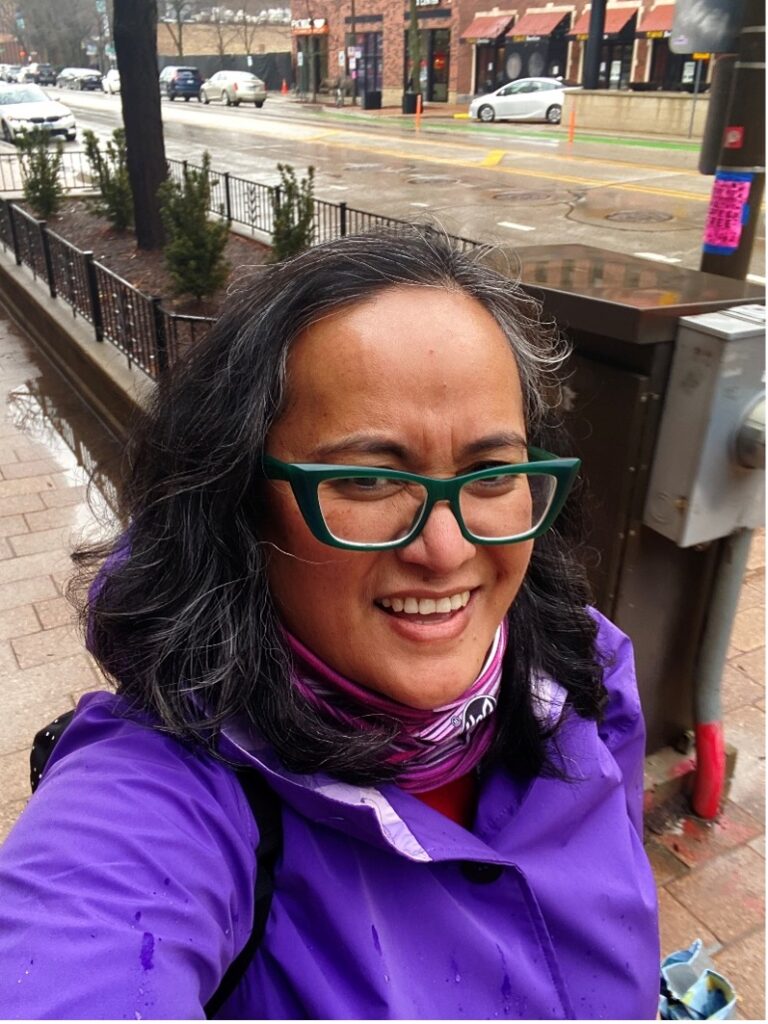
Dr Mere Taito (Rotuma: Malha’a, Noa’tau) is the inaugural Postdoctoral Scholar (2025 – 2027) at the Centre for Native American and Indigenous Research (CNAIR) and the Department of English at Northwestern University in Evanston, Chicago Illinois. She is an interdisciplinary scholar with research interests in Indigenous literary studies, language regeneration, archival studies and digital humanities. She is also a creative writer (poetry, digital poetry, flash fiction, short story) whose publications have appeared widely in the Pacific region and Aotearoa New Zealand. For her doctoral research at the University of Otago under the co-supervision of Professor Jacob Edmond and Professor Alice Te Punga Somerville, Mere applied creative and form-specific reading methods to analyse early to mid-twentieth century multilingual Rotuman mission archival texts and developed a genre of poetry – archi digi vispo – in response to these methods of close reading. Multilingual archi digi vispo fuses archival, interactive, digital and visual elements; and is positioned in her doctoral research to support Rotuman language regeneration in the diaspora. Her thesis was awarded Exceptional Status by the Division of Humanities, University of Otago.
Highly Commended: A transformative blue economy? Discourse, hegemony and passive revolution in the Pacific
In ‘A transformative blue economy? Discourse, hegemony and passive revolution in the Pacific’, Dr Philippa Louey offers a powerful analysis of discourses of the Blue Economy. In doing so, she adeptly spans disciplines as diverse as marine social science, international relations, history and critical geography, all while maintaining a deep commitment to Pacific studies and to Pacific scholarship, methodologies, and knowledges. She demonstrates, with often devastating clarity, how Blue Economy discourses have been put to work to sustain neoliberal extraction and exploitation. The judges noted the confident, authoritative quality of Louey’s analysis, praising her capacity to carefully think through the practical and policy dimensions of the problem she examines, while also engaging with conceptual complexity.